February 2026 Housing Market Trends
The Denver Metro housing market continued to shift in February as inventory growth, steady buyer activity, and seasonal momentum shaped market conditions across the region. While some indicators softened compared to last year, others point to renewed activity as the market moves further into the spring season.
Year-Over-Year Market Trends
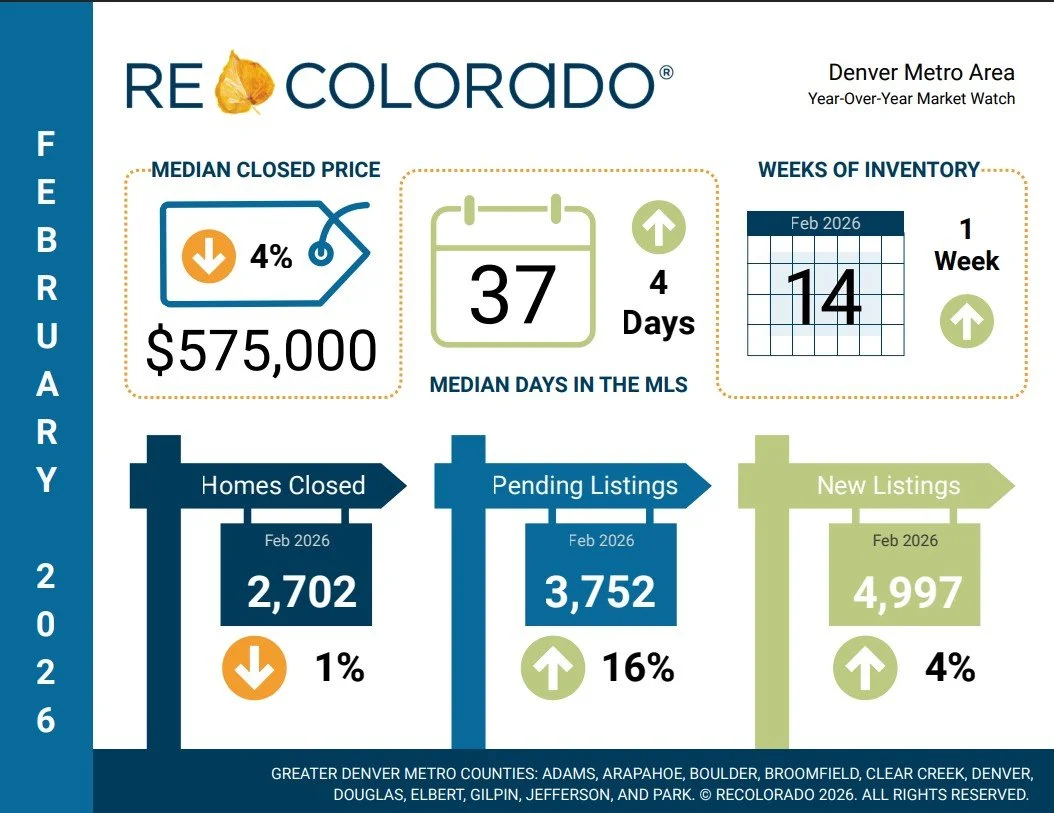
Compared to February of last year, the Denver Metro market showed signs of gradual adjustment. Closed sales declined slightly, falling 1 percent to 2,702 homes. Median home prices also eased, reaching $575,000, which represents a 4 percent decrease from February 2025. Both single-family and attached homes experienced modest price declines during this period.
Homes also spent more time on the market. The median Days in MLS increased to 37 days, which is four days longer than the same time last year. Attached homes generally required more time to sell, with a median of 46 days, compared to 32 days for single-family properties. The additional market time has given buyers more opportunity to evaluate options and negotiate terms.
Inventory growth played a significant role in these changing dynamics. New listings increased 4 percent year over year to 4,997 properties. Active inventory rose 9 percent, reaching 9,023 homes, which equates to roughly 14 weeks of supply. With more homes available, sellers are facing increased competition and must price properties strategically to attract buyer interest.
Month-Over-Month Momentum
February brought a clear rebound in activity following the slower start typically seen early in the year. Closed sales rose sharply, increasing 38 percent compared to January. The median home price also experienced a slight increase of 1 percent month over month.
The pace of the market improved as well. Median Days in MLS fell by 19 days, marking the first month over month decline since October. This shift suggests renewed engagement from buyers as the spring market begins to take shape.
Listing and contract activity also strengthened. New listings increased 12 percent compared to the previous month, while pending sales jumped 30 percent to 3,752 properties. These increases indicate that both buyers and sellers are reentering the market with stronger momentum as the year progresses.
Denver Metro Rental Market
The rental market in Denver Metro continued to show steady activity throughout February. The number of leased properties increased 21 percent year over year, reaching 260 leases.
Despite this rise in leasing activity, the median rent declined 5 percent to $2,650. At the same time, metrics tied to space efficiency moved higher. Price per bedroom rose 21 percent, and price per square foot increased 3 percent, suggesting renters are placing greater value on efficient use of living space.
Rental properties also took longer to secure tenants. Median days on market increased to 37 days, which is 10 days longer than last year. While leasing timelines have extended slightly, demand from renters remains consistent across the market.
What This Means for the Market
Overall, the February data points to a market that is balancing itself. Increased inventory is giving buyers more choices and negotiating room, while early year momentum is bringing more participants back into the market.
For sellers, competitive pricing and strong property presentation will be essential in a market where buyers have more options. For buyers and renters, the current environment offers greater flexibility and time to evaluate opportunities as the Denver Metro market continues to evolve.